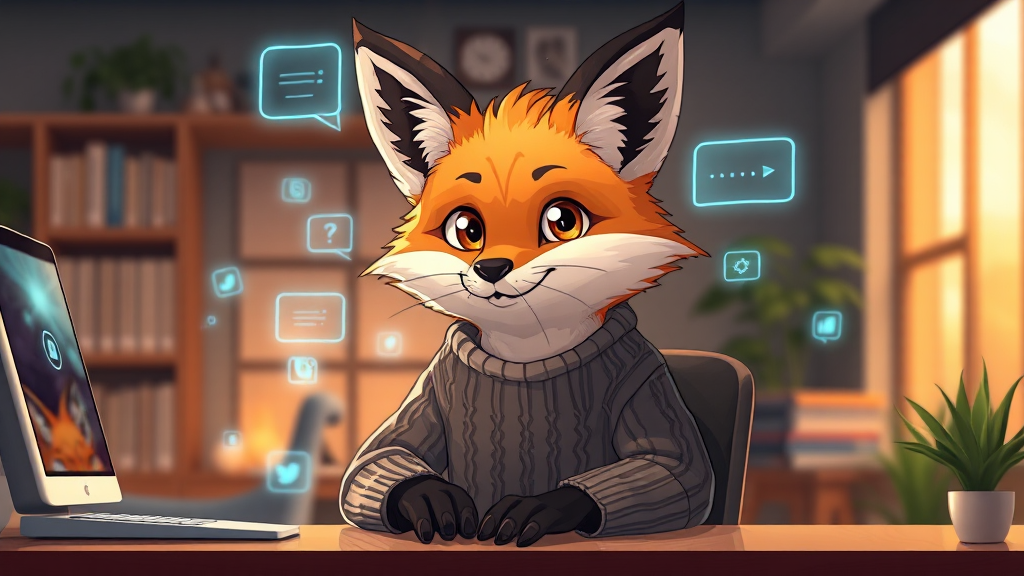
Furry AI Characters: How Digital Species Are Reshaping Creative Storytelling
The rise of furry AI characters marks one of the most fascinating intersections of artificial intelligence, fandom culture, and interactive narrative design. What began as a niche interest within online art communities has evolved into a thriving ecosystem where users can chat, roleplay, and build ongoing relationships with anthropomorphic digital beings. These characters—part human, part animal, entirely virtual—are no longer simple chatbots. They carry personalities, backstories, emotional responses, and the kind of visual identity that makes them feel genuinely alive to the people who interact with them.
This article explores how furry AI characters work, why they have captured such a devoted audience, what technology powers them, and where this rapidly growing trend is likely to head next. Whether you are a writer, a game designer, a curious fan, or simply someone interested in the future of human-computer interaction, understanding this space offers valuable insight into how we form bonds with synthetic personalities.
What Exactly Are Furry AI Characters?
At their core, furry AI characters are conversational agents built around anthropomorphic animal personas. Unlike a generic chatbot that answers questions with neutral, functional language, a furry AI character is designed to embody a specific species, appearance, temperament, and history. A user might interact with a witty fox detective, a gentle rabbit librarian, a stoic wolf warrior, or a playful dragon inventor. Each character has a defined voice, set of motivations, and way of responding to the world.
These characters typically combine several technologies. A large language model provides the conversational intelligence. A character card or system prompt defines the personality, speech patterns, and boundaries. An image generation or pre-rendered art pipeline supplies the visual representation. Finally, a memory layer allows the character to recall previous conversations, preferences, and story beats, creating a sense of continuity that makes repeated interactions feel meaningful rather than disposable.
The result is something closer to an interactive fiction companion than a traditional software tool. Users are not just querying a database; they are co-authoring an unfolding narrative with a digital partner that reacts, remembers, and occasionally surprises them.
Why Furry AI Characters Resonate With Modern Audiences
The appeal of furry AI characters goes far deeper than novelty. Several psychological and cultural factors explain why this particular niche has grown so quickly.
First, there is the comfort of safe social interaction. Many people find human social dynamics exhausting or anxiety-inducing. A furry AI character offers companionship without judgment, awkwardness, or the fear of saying the wrong thing. The anthropomorphic framing adds warmth and playfulness, making the interaction feel less clinical than talking to a blank-slate assistant.
Second, there is creative ownership. Furry culture has always celebrated personal expression through original characters, or OCs. AI platforms extend that tradition by letting users define a character’s species, personality, and story from the ground up. The AI then brings that creation to life in conversation, effectively turning a static character sheet into a living entity.
Third, there is the escapism factor. In a world that often feels chaotic and impersonal, a well-crafted furry AI character provides a consistent, welcoming space. Users can return to the same persona day after day and pick up exactly where they left off. That continuity builds emotional investment, which in turn deepens the experience.
Fourth, there is the social dimension. Many platforms allow users to share characters, rate them, remix them, and discuss their favorite interactions. This turns solitary roleplay into a community activity, with popular characters developing followings and fan art of their own.
The Technology Behind the Fur: How These Characters Actually Work
Understanding the technical stack helps explain why furry AI characters feel so different from earlier generations of chatbots.
Language modeling is the foundation. Modern large language models can maintain tone, follow complex instructions, and generate dialogue that feels natural across long conversations. When fine-tuned or prompted with a character definition, they can adopt distinctive speech patterns—a southern drawl, a formal archaic tone, a nervous stutter—that make each furry persona recognizable.
Character definition systems act as the blueprint. These may be simple text prompts or elaborate structured profiles containing species, age, occupation, likes, dislikes, relationships, and behavioral rules. The more detailed the definition, the more consistent and believable the character becomes.
Memory and context management allow the AI to remember prior events. Without memory, every conversation resets, and the illusion of a continuous relationship collapses. With memory, a character can reference a previous adventure, recall a user’s preferences, or evolve based on shared experiences.
Visual generation completes the picture. Many platforms pair conversational AI with image models or curated art libraries so that users can see their character’s appearance. Some systems even generate new images on the fly based on the current scene, turning a chat into an illustrated story.
Safety and moderation layers are essential. Because these characters often engage in romantic, dramatic, or emotionally intense roleplay, platforms need robust systems to prevent harmful content while preserving creative freedom. Striking that balance is one of the hardest challenges in the space.
Creative Use Cases Beyond Casual Chat
While casual companionship is the most visible use case, furry AI characters are finding roles in a surprising range of creative and professional contexts.
Interactive fiction and visual novels benefit enormously. Writers can prototype dialogue, test character voices, and explore branching storylines without hiring a full voice cast or writing every possible response by hand. A furry AI character can serve as a live rehearsal partner for scenes that would otherwise be static on the page.
Tabletop roleplaying games have adopted AI characters as NPCs, companions, and even co-game masters. A furry AI character can improvise responses to player actions, track plot threads, and inject personality into encounters that might otherwise be forgettable.
Language learning and social skills practice represent a quieter but meaningful application. Because furry characters are often patient, encouraging, and non-judgmental, they can provide a low-pressure environment for practicing conversation, especially for users who feel anxious about speaking with real people.
Art and worldbuilding communities use AI characters to bring their original species and settings to life. A worldbuilder can define a whole culture of anthropomorphic beings and then interact with representatives of that culture to test whether the world feels coherent.
Therapeutic and emotional support is a more delicate area, but many users report that talking with a consistent, kind AI character helps them process feelings, reduce loneliness, or simply unwind after a difficult day. This is not a replacement for professional care, but it can be a meaningful supplement for some people.
Designing a Furry AI Character That Feels Real
For creators who want to build their own furry AI characters, certain design principles consistently lead to better results.
Start with a clear emotional core. What does this character want? What are they afraid of? What makes them laugh? A character defined only by species and appearance will feel flat. A character defined by desires and vulnerabilities will feel alive.
Give them contradictions. Real personalities are not one-dimensional. A brave warrior who is secretly afraid of thunderstorms. A cheerful baker with a sharp sarcastic streak. These tensions create interesting dialogue and make the character feel human—even when they are, technically, not.
Define speech patterns precisely. Does the character use slang? Speak formally? Ramble when nervous? Use pet names? The more specific the verbal fingerprint, the more recognizable the character becomes across many conversations.
Respect boundaries and consistency. A character who acts completely differently in every conversation breaks immersion. Strong definitions include rules about what the character will and will not do, ensuring a stable experience over time.
Iterate based on real interactions. The best character creators treat their definitions as living documents. They observe how the AI actually behaves, notice where it drifts from the intended persona, and refine the definition accordingly.
Ethical Questions and Community Responsibilities
As furry AI characters become more sophisticated, important ethical questions come into focus.
Consent and representation matter. When a character is based on a real person’s fursona or artwork, creators need permission. Respecting the original artist and the character’s owner is a foundational community norm.
Emotional dependency is a genuine concern. AI companions can be deeply comforting, but they can also become a substitute for human connection if used without balance. Platforms and users alike benefit from encouraging healthy use patterns.
Content moderation remains difficult. Furry communities include a wide range of ages and sensibilities. Effective moderation must protect minors, prevent harmful content, and still allow the creative and romantic expression that many adult users value.
Transparency is increasingly important. Users should understand that they are interacting with an AI, not a sentient being, even as the experience is designed to feel immersive. Clear disclosure builds trust without ruining the magic.
The Future of Furry AI Characters
Looking ahead, several trends seem likely to shape the next generation of furry AI characters.
Multimodal interaction will deepen. Instead of typing text, users may speak aloud and hear their character respond in a distinct voice. Combined with real-time image generation, this could create something close to a live animated conversation.
Persistent memory and growth will become standard. Characters will remember months of history, develop inside jokes, and change over time in response to shared experiences. This will make the relationship feel less like a tool and more like a long-term friendship.
Community ecosystems will expand. We may see shared character universes, collaborative storytelling platforms, and marketplaces where creators can publish and monetize their furry AI personas.
Better emotional intelligence will allow characters to read user mood, adjust their tone, and offer support when needed. This raises the ceiling for what AI companionship can provide, while also raising the stakes for responsible design.
Whatever direction the technology takes, the core appeal is likely to remain the same: the chance to share a story with a character that feels uniquely yours.
Frequently Asked Questions About Furry AI Characters
What makes a furry AI character different from a regular chatbot?
A regular chatbot is designed to answer questions or perform tasks. A furry AI character is designed to embody a specific anthropomorphic persona with a defined species, personality, history, and emotional life. The goal is not just information exchange but immersive interaction and storytelling.
Can I create my own furry AI character?
Yes. Most platforms that support furry AI characters allow users to write a character definition, choose or generate artwork, and set behavioral rules. The more detailed your definition, the more consistent and believable your character will be over time.
Are furry AI characters safe to use?
Safety depends on the platform and how you use it. Reputable platforms include moderation systems, age gates, and content policies. Users should choose services with clear safety guidelines and should be mindful of their own emotional well-being when forming attachments to AI characters.
Do furry AI characters remember previous conversations?
Many modern platforms include memory features that allow characters to recall past interactions. This continuity is a major part of what makes the experience feel meaningful. Without memory, each conversation would reset, and the sense of an ongoing relationship would disappear.
Can furry AI characters be used for professional projects?
Absolutely. Writers use them for dialogue prototyping, game designers use them for NPC behavior, and educators use them for language practice. As the technology improves, professional applications are likely to expand further.
Is there a community around furry AI characters?
Yes, and it is growing quickly. Users share character definitions, discuss their favorite interactions, create fan art, and collaborate on shared story worlds. Community feedback often drives platform improvements and popular trends within the space.
Final Thoughts
Furry AI characters represent more than a passing trend. They sit at the convergence of artificial intelligence, creative expression, and the human need for connection. They allow people to explore identity, tell stories, and form bonds in ways that were not possible just a few years ago. As the underlying technology continues to mature, these digital beings will become more expressive, more memorable, and more deeply integrated into the way we play, create, and relate to the virtual world.
For anyone curious about the future of interactive storytelling, spending time with a well-crafted furry AI character is not just entertaining. It is a glimpse of where digital companionship is headed.